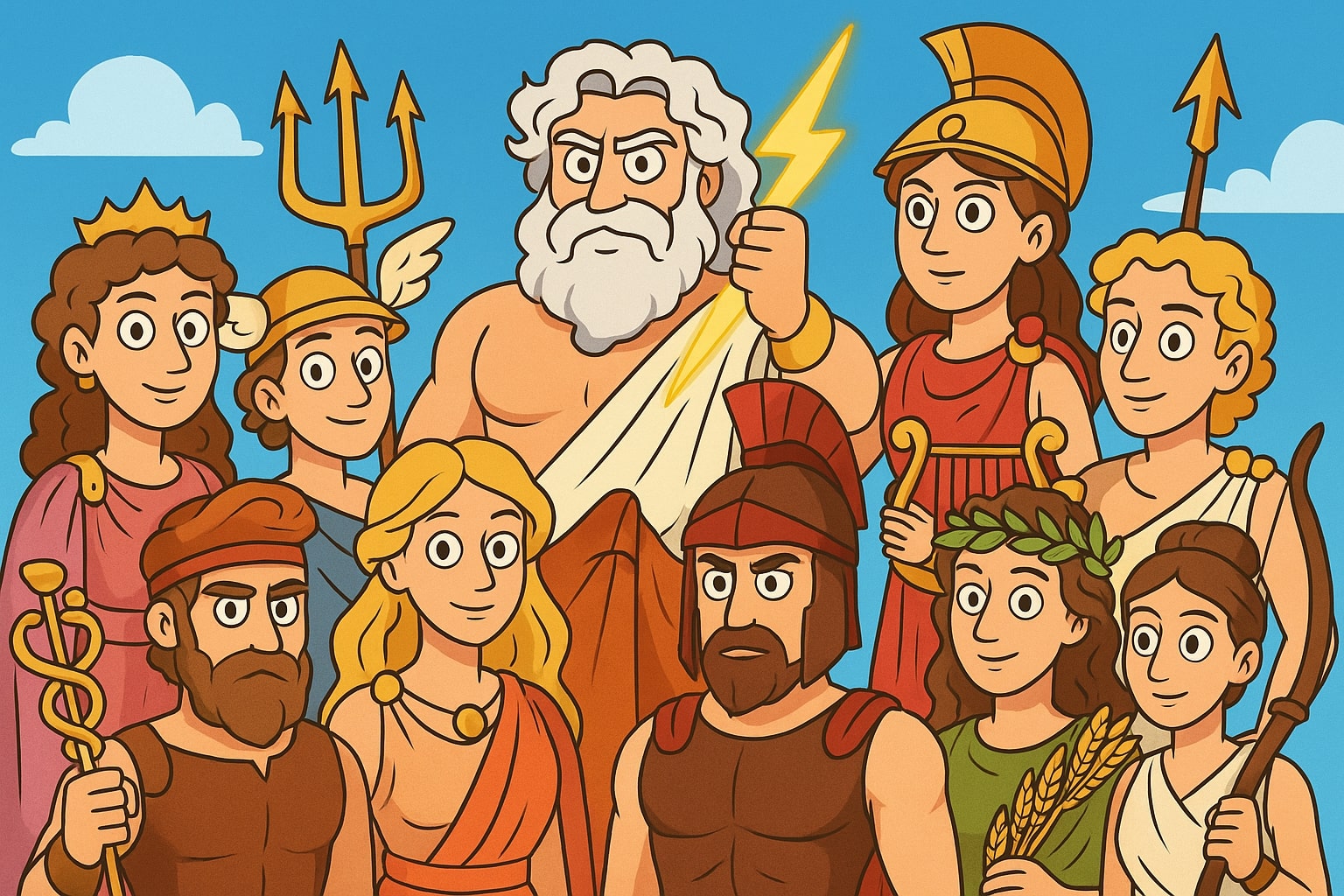

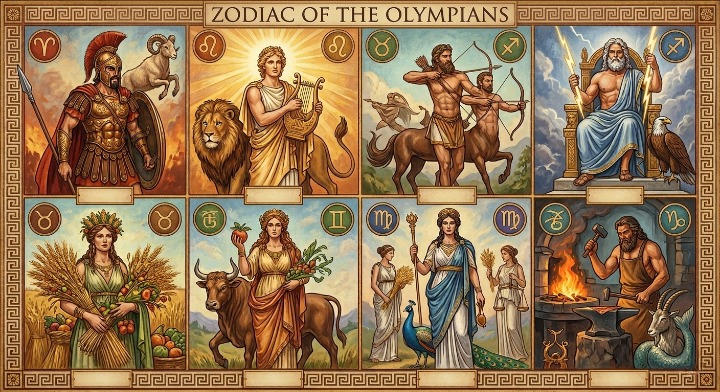
Assigning zodiac signs to the Olympian gods is a fascinating exercise because their personalities are so distinct and well-documented through mythology.
While the Greeks did not have or even develop the zodiac we use today, based on their domains, temperaments, and famous myths, here is how the Olympians align with the twelve signs:
The Fire Signs: Passion and Vitality
Aries: Ares. Not just due to the name resemplance. The god of war is the most natural fit. He represents the raw, impulsive, and aggressive energy of Aries. His actions are governed by instinct and the heat of the moment rather than long-term strategy.
Leo: Apollo. As the god of the sun, music, and prophecy, Apollo embodies the radiance and creative «star power» of Leo. He is often depicted as the most beautiful and talented, seeking the spotlight and maintaining high standards of excellence (and frequent vanity).
Sagittarius: Zeus. Zeus rules over the expansive sky and over many stubborn gods, as the ultimate «top dog». Like Sagittarius in the zodiac cycle, he is associated with law, philosophy, and a constant quest for new experiences (often reflected in his many travels and transformations).
The Earth Signs: Stability and Craft
Taurus: Demeter. The goddess of the harvest is deeply rooted in the physical world and the cycles of the nature. She represents the Taurean qualities of nurturing, persistence, and the fierce protection of what she values, alongside the merciless ways of achieving it (as seen in her search for Persephone).
Virgo: Hera. While often associated with marriage, Hera’s mythological role involves maintaining social order and structure. Her attention to detail, high expectations of conduct, and role as the «Queen of Heaven» align with Virgo’s pursuit of perfection and duty.
Capricorn: Hephaestus. The blacksmith god represents the ultimate Capricorn work ethic. He is the living representation of craftsmanship and industry, known for his patience, solitude, and the ability to build enduring structures from any material available.
The Air Signs: Intellect and Communication
Gemini: Hermes. The messenger god is the quintessential Gemini. He is quick-witted, dual-natured (moving between the living and the dead), and rules over communication, commerce, and trickery. He is the ultimate «social butterfly» of Olympus.
Libra: Aphrodite. As the goddess of love, beauty, and harmony, Aphrodite seeks balance in relationships. Libra is ruled by Venus, and her myths often center on the aesthetics of the world and the complexities of human (and divine) attraction.
Aquarius: Athena. Athena represents the detached, intellectual side of air. She is the goddess of wisdom and strategic warfare, often stepping back to look at a problem objectively. Her invention of tools and her role as a patron of civilization reflect the Aquarian focus on progress.
The Water Signs: Emotion and Intuition
Cancer: Artemis. Though she is a fierce hunter, Artemis is the goddess of the moon and the protector of the vulnerable. She represents the Cancerian traits of intuition, wildness, and a deep, protective instinct toward her «inner circle» and the natural world.
Scorpio: Hades. His title, Plouton (the Rich One), highlights his dominion over the literal «hidden gems» of the earth—the gold, silver, and precious ores buried deep within the soil. Much like the Scorpio association with shared resources and «other people’s money,» Hades manages the vast, unseen capital of the world. In this sense, his wealth isn’t just about coins, but about the immense, quiet power that comes from controlling the foundational assets that everyone eventually relies on, yet rarely sees.
Pisces: Poseidon. The most logical conclussion. The god of the sea rules over the vast, emotional, and sometimes turbulent waters. Pisces is associated with the subconscious and the fluid nature of reality, mirroring Poseidon’s unpredictable temperament and his connection to the depths of the ocean.
So, with which ancient Greek god or goddess would your sign match?